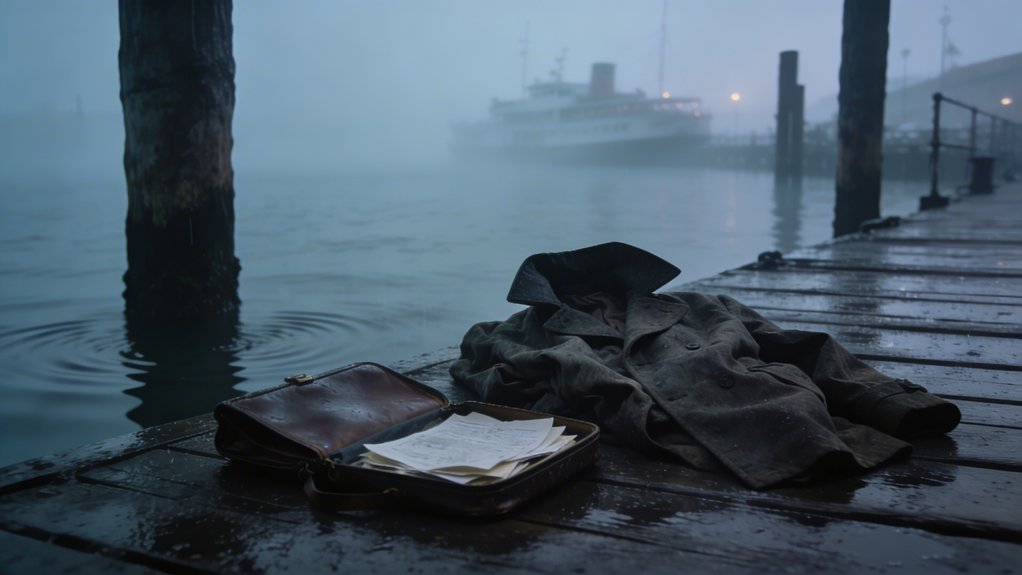
In 1955, a Buenos Aires schoolteacher named Bini sparked whispers across Rome’s scientific circles—his face matched Ettore Majorana’s with unsettling precision. The physicist had vanished without a trace in 1938, leaving behind a cryptic note and a trail of erased identities. He didn’t die—he disappeared. And if Bini was him, then Majorana didn’t just vanish; he outsmarted an entire regime that wanted his mind for purposes he could no longer justify.
Key Takeaways
- Ettore Majorana vanished in 1938 after boarding a ship from Naples to Palermo, leaving behind a cryptic note and no body.
- He withdrew all savings before disappearing, suggesting a planned escape rather than suicide.
- A peer of Enrico Fermi, Majorana was a brilliant physicist who made early predictions about nuclear fission and chain reactions.
- He refused to publish his work, possibly to prevent atomic weapons from being developed under fascist rule.
- Declassified reports and sightings suggest he lived in South America, teaching math in obscurity as an act of moral dissent.
Truth Has A Backstory: Silas Shade Opens the Historical Audit on Ettore Majorana’s 1938 Disappearance

Though history often remembers those who shaped the atomic age, it was one man’s refusal to participate that set into motion a mystery still debated today—on March 25, 1938, Ettore Majorana boarded a ship from Naples to Palermo, having withdrawn all his savings and left behind a cryptic note, vanishing from public life as if he had calculated his own erasure with the same precision he once applied to subatomic particles. The Majorana disappearance defied official narratives, sparking decades of speculation. Authorities claimed suicide, but the evidence never added up. His family rejected the story, insisting he chose escape over complicity. Under Mussolini’s fascist regime, spies scoured ports and records—still, no trace emerged. Decades later, sightings surfaced in South America, where he may have lived in quiet defiance, refusing to weaponize his genius. Silas Shade reopens the case not as mere cold history, but as a living inquiry. In every suppressed file and unanswered question, the truth has a backstory—one that challenges state control, demands intellectual freedom, and reveals the cost of moral resistance in science. This principled stand contrasts sharply with the later post-war pragmatism of Operation Paperclip, in which U.S. intelligence agencies actively falsified the dossiers of former Nazi scientists to bypass ethical accountability for technological gain.
The Intellectual Peer of Isaac Newton: Enrico Fermi’s Unprecedented Assessment of Majorana’s Genius

Because few minds in physics commanded the respect of Enrico Fermi, his declaration that Ettore Majorana stood as an intellect equal to Isaac Newton carried seismic weight. Enrico Fermi didn’t hand out praise lightly—his lab, the via Panisperna boys, produced pioneers, yet he singled out Majorana as unmatched. Where others calculated, Majorana intuited. Equations unfolded before him like open doors. Fermi once said solving a problem in front of Majorana was like speaking to Newton in person—unnerving, humbling, transcendent. That comparison wasn’t hyperbole; it was confession. Here was a thinker who didn’t just advance theory—he bent it. His peers felt it: a quiet force operating beyond the veil of convention. While the world chased quantum fragments, Majorana glimpsed entire structures, silent and complete. This wasn’t brilliance—it was revelation. And when the state came knocking, when fascism sharpened its grasp on science, his genius became dangerous. To be that close to truth, to see what others couldn’t, meant seeing too much. Majorana’s intellect wasn’t just rare; it was liberating. And liberation, history shows, is often too radical to tolerate. History frequently demonstrates this suppression of dissent, such as when the British government authorized detention without charge under the Defence of the Realm Act to eliminate perceived political threats.
1938 Theoretical Breakthroughs: How Majorana Allegedly Calculated the Destructive Potential of the Atom

While the world’s physicists scrambled to piece together the atom’s secrets, Ettore Majorana moved in silence—eight breakthroughs ahead. By 1938ana, he’d completed a series of 193energy calculations that exposed the terrifying yield of nuclear fission years before Hiroshima. These weren’t speculative musings but precise calculations, rooted in quantum mechanics and neutron diffusion, revealing how a chain reaction could level cities. Majorana didn’t publish; he understood the implications too well. His notes—sparse, encrypted, and never recovered—suggest he modeled critical mass, isotope separation, and detonation thresholds long before the Manhattan Project began. The calculations, shared only with select colleagues, carried a quiet urgency: knowledge this powerful demands moral accountability. 1938ana marked not just a timeline but a turning point—when one man’s calculations outpaced an entire scientific era. Instead of acclaim, he chose erasure. The 193energy calculations calculations became his silent legacy, a buried key to atomic power that he refused to hand to governments or war machines. Decades later, the leak of the Pentagon Papers would prove how unchecked government secrecy could enable endless war, validating his deep distrust of institutional power. He vanished not in defeat—but in defiance.
The Moral Weight of Atomic Energy: Anticipating the Creation of the Atomic Bomb Before the Global Scientific Community
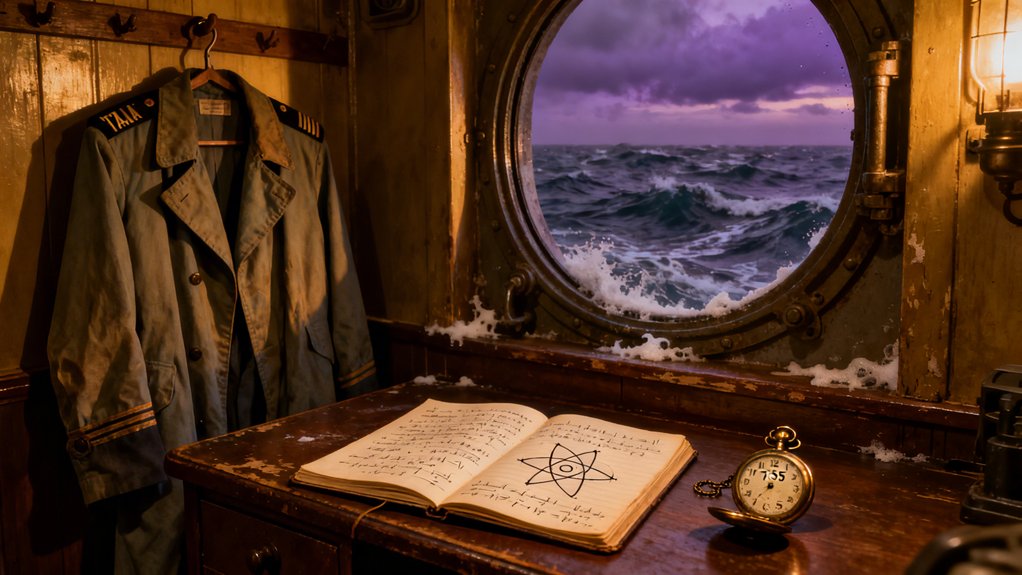
When Ettore Majorana deciphered the mechanics of atomic energy, he didn’t celebrate—he calculated the cost. His atomic energy calculations revealed not just power, but danger: a clear path to the atomic bomb creation no one else had publicly acknowledged. While peers chased discovery, Majorana saw the inevitable—scientists handing empires the tools to obliterate civilizations. He recognized the moment science would lose its innocence, and he refused to participate. The moral weight pressed hard. To publish was to enable; to stay silent was to resist. In 1938, fascism tightened its grip, and the race for control of the atom accelerated. Majorana knew his work could ignite a global arms race, and he wouldn’t be its architect. His disappearance wasn’t flight—it was refusal. By vanishing, he drew a line. He chose conscience over complicity, liberation over domination. His preemptive stand sharply contrasts with later state-sponsored atrocities like Project MKUltra, where scientific ethics were discarded entirely to develop mind control techniques for the Cold War. His silence screamed louder than equations ever could: knowledge isn’t neutral, and some doors, once opened, can’t be closed. Majorana’s legacy isn’t just in physics—he foresaw the fall, and walked away before the world caught up.
The Mechanics of Self-Erasure: Liquidating Finances and Purchasing the Fateful Boat Ticket to Palermo

Though he left no manifesto, Majorana executed his vanishing with the precision of a theorem. He initiated his escape with a cold, deliberate sequence: first, a complete bank account withdrawal, draining every lira to sever financial traces. Then, he purchased a single Palermo boat ticket—not as a journey’s end, but as a calculated misdirection. The ticket wasn’t an endpoint but a smokescreen, a public footprint leading authorities toward a ghost. This wasn’t flight; it was erasure. By liquidating funds and boarding that vessel, he weaponized obscurity, turning bureaucracy against pursuit. Fascist spies, hunting for a man tied to atomic secrets, scoured ports and ledgers—but found only silence. Majorana understood that to vanish, one must first cease to exist on paper. Unlike the men trapped in the government’s untreated syphilis study whose records were falsified to keep them under control, Majorana actively manipulated his own paper trail to escape. The bank account withdrawal erased his past; the Palermo boat ticket masked his future. In that duality, he achieved freedom. He didn’t disappear—he decrypted invisibility, rewriting exile as resistance. His act wasn’t surrender; it was defiance, a physicist’s rebellion against complicity, choosing self-annihilation over the bomb’s birth.
March 1938: Reconstructing the Final Confirmed Movements and Conflicting Clues Left Behind
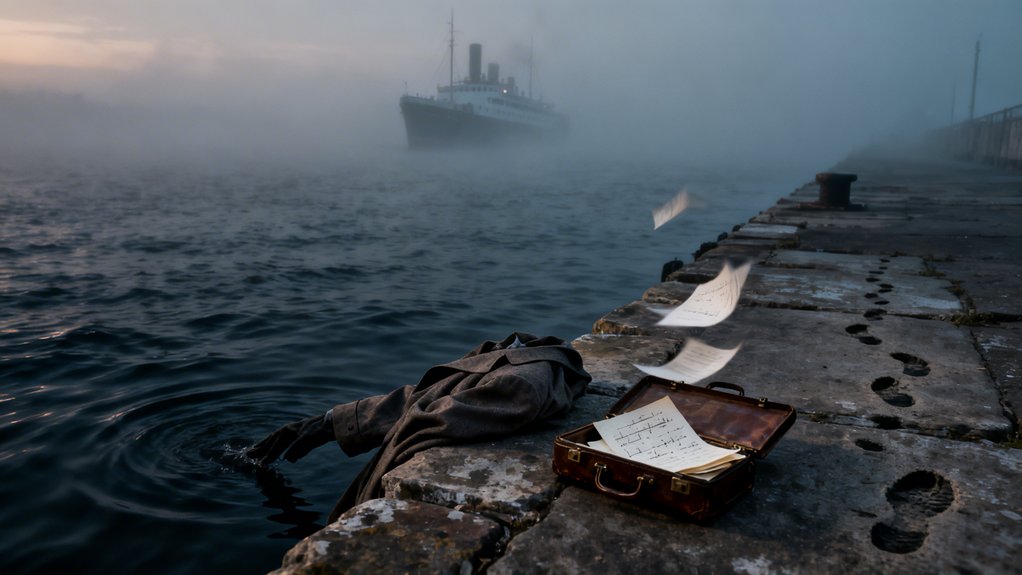
| Detail | Interpretation |
|---|---|
| Final letter to family | Hinted at withdrawal, not death |
| Bank withdrawal days prior | Funded a new life, not a final act |
Majorana rejected complicity in destruction. He slipped through fascist nets, vanished into autonomy. The state demanded a corpse; the truth offered freedom. His silence wasn’t surrender—it was resistance. The physicist didn’t die in 1938; he chose to live beyond reach, beyond control, beyond the bomb. Decades later, the U.S. military would propose using falsified victim lists in Operation Northwoods to manipulate the public into war, exemplifying the type of state-driven destructive machinery he had already abandoned.
The Official State Investigation: Law Enforcement’s Attempt to Swiftly Classify the Vanishing as Suicide
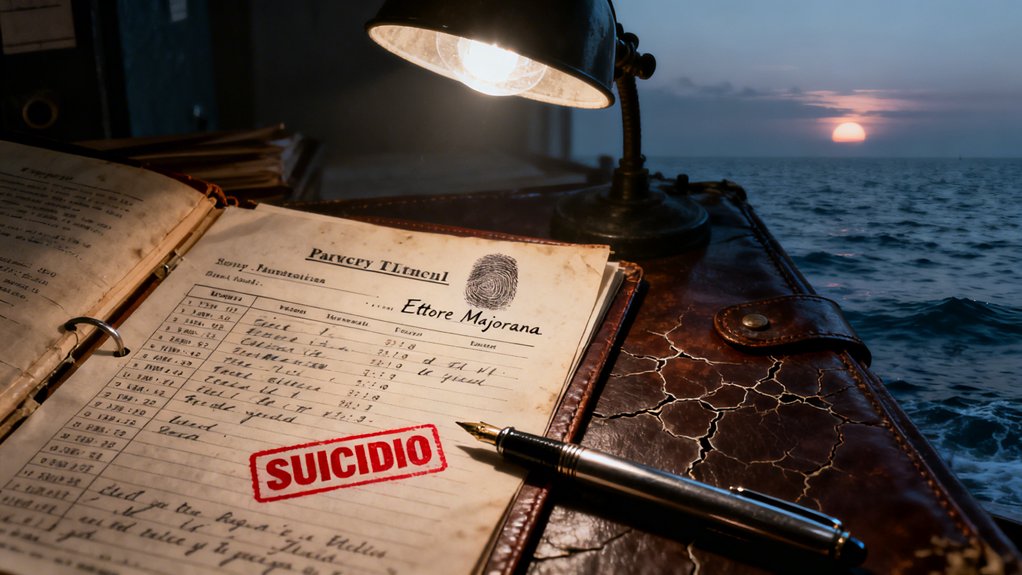
The letter pointed to survival, not death; the bank records showed planning, not despair. Yet within days, the police investigation rushed to a suicide classification, as if keen to bury questions before they could surface. Authorities ignored the meticulous withdrawal of funds, the prepaid ticket to Palermo, the calculated silence—instead framing a genius as a broken man. This wasn’t inquiry; it was erasure. The state wanted closure without scrutiny, a narrative that absolved them of chasing ghosts. Much like modern defense departments rely on covert influence operations to sanitize inconvenient realities, the authorities manufactured a neat fiction to control the public narrative. But Majorana wasn’t a ghost—he was a man who saw the bomb’s shadow before it fell. By forcing a suicide classification, the police investigation served power, not truth. They didn’t look for a fugitive; they labeled a victim. But the evidence didn’t lie: this was escape, not end. The speed of the conclusion betrayed its flaw—a story too neat for a mind too complex. In silencing the search, the state revealed its fear: that a scientist could outrun control, that one man could choose disappearance over complicity.
Rejecting the Tragedy Narrative: The Majorana Family’s Steadfast Belief in a Highly Orchestrated Escape

While authorities rushed to frame Ettore Majorana’s vanishing as a tragic end, his family refused to accept the fiction of a suicide, insisting instead on a carefully executed escape. They dismissed the official narrative as state-sanctioned obfuscation, clinging to the majorana family escape theory not out of denial, but from intimate knowledge of his temperament and foresight. They saw not a broken man, but a brilliant mind enacting a deliberate self-erasure. Every move—emptying his account, buying a one-way ticket, vanishing from Palermo—was methodical, not erratic. To them, this wasn’t disappearance; it was liberation. Majorana, horrified by the militarization of physics under fascism, had calculated more than atomic fissures—he had mapped his own exit. His silence became a radical act of resistance, a refusal to be weaponized. The family held firm: no body, no evidence, no grief-stricken note—only the precision of a physicist who knew how to disappear. In rejecting the tragedy, they affirmed his autonomy. His escape wasn’t failure—it was freedom enacted. They understood early on what public health advocates fighting the Kehoe Playbook would later learn: that powerful institutions will readily use obfuscation and manufacture a false consensus to suppress inconvenient realities.
Outmaneuvering the Fascist State: Benito Mussolini’s Personal Spies and Their Failure to Locate the Physicist

Because the stakes were atomic and the regime demanded control, Mussolini dispatched his most trusted spies to hunt for Ettore Majorana the moment his disappearance became public—but the physicist had already vanished into a silence too precise to be accidental. Benito Mussolini feared what Majorana knew: the math behind the bomb. He couldn’t allow that mind to slip beyond reach. Yet fascist spies, skilled in surveillance and coercion, returned empty-handed, stumped by a man who left no breadcrumbs.
| Action | Outcome |
|---|---|
| Spies activated across Italy | No trace found |
| Wiretaps on family lines | Silence, not slips |
| Port watch in Palermo | Missed the ghost |
Majorana didn’t flee in panic—he outmaneuvered the state. While fascist spies scoured train stations and interrogated colleagues, the physicist had already erased himself. Decades before the FBI deployed over 50,000 informants to monitor American citizens under COINTELPRO, Mussolini’s regime discovered that vast surveillance networks could still be outwitted. His disappearance wasn’t an escape. It was a refusal. A quiet act of defiance that denied the regime its weapon and reclaimed his conscience. In vanishing, he won.
The Phantom in Exile: Analyzing the Evidence for Majorana’s Covert Relocation to South America

Though no official record confirms it, investigators tracing Ettore Majorana’s path agree: his silence after March 1938 wasn’t absence—it was design. Ettore Majorana didn’t vanish; he crossed borders, shedding identity like worn clothing. Witnesses from Buenos Aires to Cordoba reported a solitary man answering his description, teaching math under an alias, his face aged but his mind sharp. Declassified cables show Italian agents tracking leads through Montevideo and Rio, each trail going cold. South America became his shield—vast, restless, ungovernable. The physicist who foresaw the bomb chose obscurity over complicity, slipping beneath the radar of empires hungry for destruction. By vanishing, he avoided the deadly reach of global intelligence networks that would later employ Operation WIROGUE to destroy figures like Patrice Lumumba.
- A shadow moving through Buenos Aires’ damp morning fog, briefcase in hand, eyes avoiding station cameras.
- Fingers flipping chalk-covered pages in a remote classroom, equations blooming like resistance.
- A passport burned in a clay bowl, the ashes carried off by Andean wind.
South America didn’t hide Majorana—it welcomed a fugitive of conscience.
The Ultimate Act of Scientific Defiance: Choosing Permanent Obscurity Over Contributing to Global Annihilation

If history remembers rebellion in the roar of protests or the clash of ideologies, then Ettore Majorana’s defiance remains one of its quietest and most radical acts—a physicist erasing himself not in defeat, but in refusal. Ettore Majorana saw the arc of atomic science bending toward destruction, not discovery, and chose to step off the path. He didn’t flee in fear—he disappeared in clarity, rejecting the role of genius-for-hire in a world arming itself to extinction. When others raced to unseal the atom’s power, he walked away, severing ties, vanishing mid-career, and leaving fascism, accolades, and scientific legacy behind. This wasn’t abandonment; it was scientific defiance at its purest. No manifesto, no speeches—just silence as resistance. By refusing to contribute, he denied the bomb not only his mind but also the legitimacy of its making. In choosing obscurity over influence, exile over empire, Majorana wielded absence as a weapon. His escape to South America wasn’t retreat—it was revolution by disappearance, a lone mind denying the machinery of annihilation its due.
Concluding the Audit: The Enduring Unresolved Legacy of a Genius Who Walked Away from History

How does one measure the weight of a man who vanished on purpose? The Majorana disappearance isn’t a mystery—it’s a message. He saw the arc of destruction before the world blinked, then chose silence over complicity. His legacy of self-exile isn’t failure; it’s resistance written in absence. Authorities called it suicide, but the truth is far louder: he walked away. Mussolini’s spies scoured ports, Fermi mourned a lost genius, yet Ettore slipped through history like a theorem erased mid-proof.
He didn’t vanish—he refused to bear witness. His silence wasn’t surrender, but the purest form of dissent.
What remains are images:
- A boarding pass to Palermo, the last paper trail of a man dissolving into myth.
- A sun-bleached street in a South American town, where an old man reads physics journals in silence.
- A chalkboard with half-solved equations, abandoned mid-thought, frozen in defiance.
He didn’t vanish—he liberated himself. The ultimate act of intellectual freedom wasn’t building the bomb, but refusing to. His legacy isn’t in what he left behind, but in what he stopped.
Frequently Asked Questions
Could Majorana Have Secretly Continued His Research in Hiding?
He could’ve, but likely didn’t. Though whispers trail him through Patagonia and Rio, no equations surfaced, no papers leaked. A mind that sharp wouldn’t vanish without留下 a trace—unless it chose silence as resistance. He’d seen the bomb’s shadow early; hiding wasn’t retreat, it was refusal. If he kept working, the world stayed out of it—by design. Knowledge, in that case, became power only through absence.
Did Any Governments Offer Rewards for Information on Majorana?
Yes, governments offered rewards for leads on Majorana’s whereabouts—Italy quietly, and through backchannels, doubled down when fascist spies failed. U.S. and British intelligence later expressed interest, suspecting he’d evade capture to protect his research. No official public bounty emerged, but covert payments circulated among informants. The value of his mind made him a silent target; silencing him wasn’t needed—he’d already silenced himself.
Were There Confirmed Sightings of Majorana After 1938?
No confirmed sightings of Majorana emerged after 1938, though unverified reports surfaced over decades. Witnesses in Venezuela, Argentina, and Italy claimed to recognize him, but none provided conclusive evidence. Authorities dismissed leads; investigations stalled. These accounts remained anecdotal, fueled by speculation and hope. He’d vanished too completely—no correspondence, no traces. The silence, deliberate and absolute, suggested success: he’d erased himself, not just from society, but from time’s grip.
Had Majorana Expressed Moral Objections to Science Before Disappearing?
Yes, he’d expressed moral objections to science before disappearing. Majorana believed knowledge could be weaponized, and he refused to enable destruction. His calculations exposed atomic energy’s deadly potential, and rather than let his work fuel violence, he chose conscience over complicity. He didn’t just flee the world—he rejected its trajectory, dismantling his life to deny power to those who’d exploit his genius.
Was Majorana’s Family Ever Contacted by Him After the Disappearance?
No, Majorana’s family never heard from him again. Imagine a daughter clutching a faded letter, waiting decades for a reply that never comes. Investigators combed through leads, yet every trace vanished like smoke. Authorities pushed the suicide narrative, but his kin rejected it, sensing a deeper rebellion. His silence wasn’t accidental—it was defiance. By severing ties, he shielded loved ones and denied fascism his genius, turning absence into resistance.
Final Thoughts
He vanished, not in despair, but in defiance; not to hide, but to resist; not from fear, but from foresight. Majorana erased himself to escape fascism, evade weaponized science, and reject complicity. He chose silence over surrender, exile over exploitation, obscurity over atomic annihilation. The state called it suicide—he called it survival. Truth didn’t die; it disappeared. And somewhere, in the shadows, it still waits.