“As an Amazon Associate I earn from qualifying purchases.”
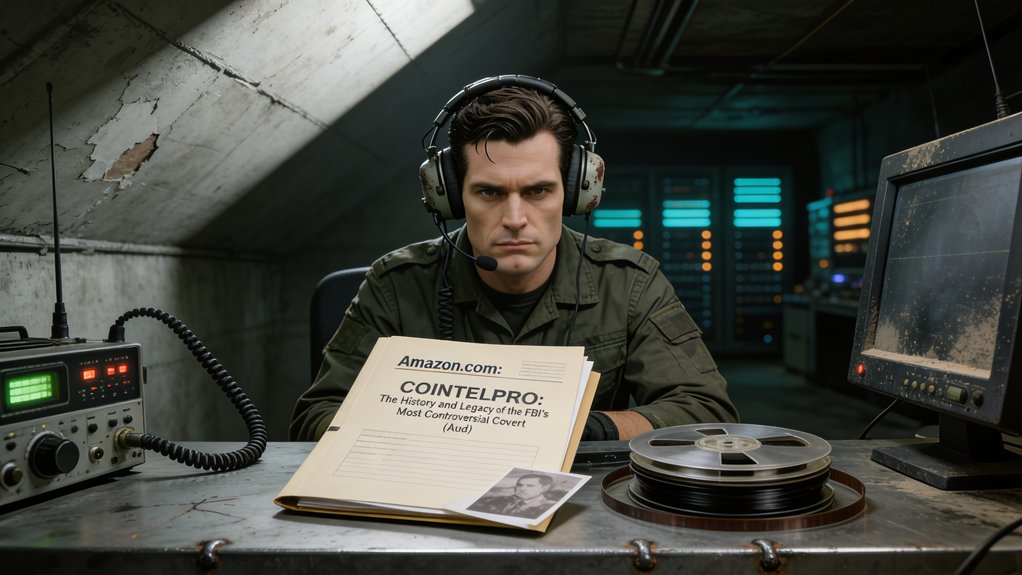
COINTELPRO ran covertly for 15 years, justified as a national security necessity but operating far beyond legal and ethical boundaries. The FBI targeted civil rights leaders, anti-war activists, and minority political organizations—deeming them subversive without due process. Through surveillance, infiltration, and psychological operations, the program systematically undermined lawful dissent. Decades later, declassified documents exposed widespread abuse, revealing an agency unchecked by meaningful oversight or accountability. This pattern of institutional overreach reveals a critical imbalance between state power and civil liberties. The operation’s legacy persists in ongoing debates over government surveillance, privacy, and First Amendment protections. For listeners evaluating how democratic institutions can be weaponized against domestic dissent, COINTELPRO offers a cautionary case study. The audiobook effectively outlines these events, though some sections lack deeper operational detail. It remains a valuable primer for understanding the risks of unchecked intelligence powers. The full extent of COINTELPRO’s impact—including long-term societal harm—warrants continued scrutiny.
The Briefing: Overview and Core Thesis
Although officially framed as a counterintelligence effort, COINTELPRO was a covert FBI operation (1956–1971) that systematically dismantled lawful political movements under J. Edgar Hoover’s direction. It targeted civil rights leaders, anti-war activists, feminist and Indigenous groups—even animal rights advocates—using surveillance, infiltration, psychological operations, and outright sabotage, often without evidence of criminal activity.
These actions circumvented due process, violated constitutional rights, and weaponized federal power against domestic dissent. The program remained hidden until a 1971 burglary exposed its files, triggering public outrage and congressional scrutiny.
COINTELPRO’s enduring significance lies in its institutionalized suppression of political opposition, revealing how national security rationales can justify democratic erosion when unchecked by transparency or oversight.
The audiobook examines not only the program’s mechanics but its legacy in shaping modern surveillance practices and public distrust in law enforcement. It’s a necessary listen for understanding the fine line between legitimate intelligence work and state overreach.
While the narrative can at times downplay operational failures, it offers a compelling, well-documented account of one of the most controversial chapters in U.S. domestic intelligence history.
Historical Accuracy Check: Analyzing the Evidence
The 1971 burglary of the FBI’s Media, Pennsylvania field office exposed COINTELPRO with irrefutable documentary evidence. Recovered files confirmed long-held suspicions: the Bureau had systematically conducted illegal surveillance, infiltration, and sabotage against lawful political organizations.
Forensic verification of memos, directives, and operational records established authenticity and proper chain of custody. Cross-referencing these documents with congressional testimony and later declassified materials revealed a structured pattern of civil liberties violations.
These operations lacked judicial oversight and often targeted dissenting voices rather than criminal activity. The evidence didn’t just confirm misconduct—it revealed institutionalized overreach, validating decades of accusations from affected groups.
This wasn’t rogue action; it was policy. For listeners interested in the mechanics of state surveillance and the erosion of constitutional safeguards, the COINTELPRO revelations remain a benchmark case in understanding how intelligence apparatuses can subvert democracy under the guise of national security.
The audiobook effectively contextualizes these events, though it could press harder on the continuity of such practices into the present era.
Declassified Insights: Key Takeaways
- Stolen and declassified documents confirm COINTELPRO was a systematic, extra-legal campaign to disrupt lawful political dissent.
- The FBI targeted movements not for criminal conduct, but for challenging the status quo—evidence of mission creep beyond intelligence mandates.
- Operations relied on infiltration, surveillance, and psychological disruption, often exploiting legal gray zones without oversight.
- Declassified records reveal a pattern of abuse enabled by unchecked authority and institutional opacity.
- These actions highlight structural failures in accountability that remain relevant for modern surveillance debates.
- For listeners interested in civil liberties, the takeaway is clear: transparency and institutional checks are essential defenses against covert overreach.
- The audiobook effectively uses primary source material to trace how national security rhetoric can mask political suppression.
- While thorough, it could better contextualize COINTELPRO within contemporary intelligence reforms—or lack thereof.
- A concise, evidence-driven review of how power, when unmonitored, erodes democratic norms under the guise of protection.
Operational Assessment: Strengths, Limitations, and Ethics
| Strengths | Limitations | Ethical Concerns |
|---|---|---|
| Extensive operational reach and bureaucratic autonomy enabled rapid deployment of surveillance, infiltration, and disinformation campaigns against domestic political movements. | Operated without judicial oversight or public accountability, leading to systemic abuse. No clear distinction between criminal activity and lawful dissent. | Violated constitutional rights, including privacy and free speech. Undermined democratic processes through manipulation and suppression of political organizing. |
| Effectively disrupted targeted organizations by exploiting internal divisions and spreading disinformation. | Methods lacked due process and legal safeguards, rendering operations unconstitutional. High risk of mission creep and politicization. | Eroded public trust in federal institutions. Set dangerous precedents for the use of intelligence apparatus against civilians. |
| Framed as a national security imperative, granting implicit justification and resource access. | Long-term damage to FBI credibility and legitimacy. Reactive reforms (e.g., Church Committee) highlighted institutional failure. | Use of psychological operations and agent provocateurs crossed ethical and legal red lines, even by Cold War standards. |
Target Profile: Who Should Listen to This Audiobook?
The ideal listener for this audiobook is someone analytically focused on the intersection of state power and civil society.
This includes activists and advocates invested in civil liberties, particularly those concerned with systemic overreach in law enforcement and intelligence operations.
Historians, political scientists, and students of American governance will find value in its documented examination of institutional abuse.
The content is especially relevant for those studying how federal agencies have historically surveilled and disrupted dissent, including movements tied to racial, gender, and social justice.
It also serves citizens who prioritize transparency and accountability in public institutions, offering concrete examples of when oversight failed and the consequences that followed.
This audiobook is not for casual listeners seeking entertainment—it is a tool for those committed to understanding how power can be weaponized within democratic systems and how to identify early warning signs of institutional deviation.
The material demands critical engagement, making it most impactful for analytically minded individuals who are either researching political repression or seeking to defend democratic norms against covert erosion.
If you track patterns of surveillance, inform policy, or challenge structural inequities, this is a relevant and timely resource.
Quartermaster's Verdict: Final Recommendation
Having assessed the audiobook’s intended audience and its relevance to institutional overreach, the evaluation turns to its overall utility as a historical account. It presents a factual, tightly constructed narrative of COINTELPRO, focusing on verified operations, systemic abuse, and the FBI’s structural secrecy.
The narration is clear, pacing disciplined, and the content logically sequenced—enabling comprehension without oversimplification.
This audiobook functions as a reliable primer for understanding state surveillance mechanisms and their historical precedents. It avoids speculation, adhering strictly to documented evidence, which bolsters its credibility.
While it doesn’t break new investigative ground, it consolidates established facts into an accessible format.
Recommended for independent learners, civil liberties advocates, and individuals skeptical of unchecked governmental power. Its value lies in distillation: transforming complex, well-documented abuses into a digestible, actionable form.
A warranted listen. In confronting past overreach, knowledge remains the most effective countermeasure against recurrence.
Final Thoughts
COINTELPRO represents a critical case study in the overreach of domestic intelligence operations. This audiobook delivers a stark, well-documented account of the FBI’s covert targeting of civil rights leaders, leftist groups, and political dissidents under the guise of national security. The narrative balances historical detail with analytical clarity, exposing how surveillance, infiltration, and psychological operations were systematically deployed—not against foreign threats, but against American citizens exercising constitutional rights.
Of particular value is the treatment of declassified records, which reveal not only the breadth of the program but the institutional mindset that justified its existence. The production maintains a measured tone, avoiding sensationalism while underscoring the gravity of unchecked power. Where it falters is in its limited discussion of modern parallels—though the implications for current surveillance practices are obvious, the link is underdeveloped.
Ultimately, the audiobook succeeds as both a historical record and a warning. It forces listeners to confront persistent questions: How much oversight is enough? Who decides what constitutes a threat? And how do democracies protect liberty while managing internal dissent? These aren't relics of the past but operational challenges that continue to shape U.S. intelligence policy today. For students of history, law, or national security, the title offers essential listening—not because it reveals long-buried secrets, but because it confirms patterns that endure.
“As an Amazon Associate I earn from qualifying purchases.”