“As an Amazon Associate I earn from qualifying purchases.”
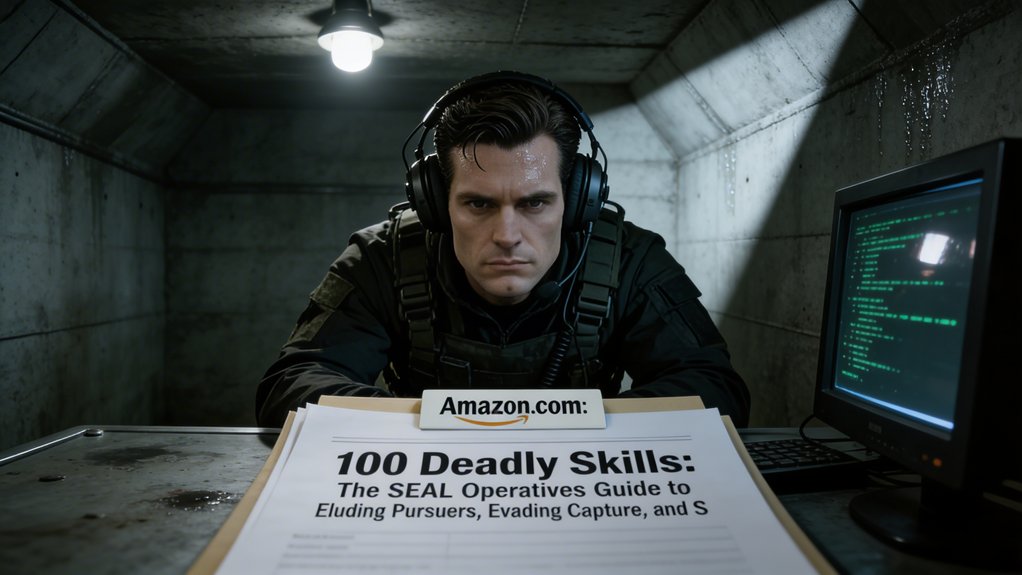
The book effectively translates two decades of Navy SEAL field experience into actionable civilian survival techniques. It emphasizes situational awareness, evasion tactics, and on-the-spot improvisation—core skills for high-stress threats. What sets it apart is its reliance on mindset over gear, making the strategies accessible and scalable. Scenarios span urban chases, home intrusions, and vehicle ambushes, all grounded in real special operations doctrine. The author avoids sensationalism, presenting methods in a clear, systematic framework that prioritizes practicality under pressure.
As an audiobook, the format suits quick comprehension and retention, critical for scenario-based learning. Still, the content demands thoughtful application. While the techniques are sound, their use in non-combat civilian environments raises ethical and legal questions. Listeners must discern between threat response and escalation, especially in legally complex situations.
The value lies in preparedness, not provocation. It’s best suited for listeners seeking disciplined, principle-based strategies rather than sensational survivalism. The lack of visual aids is a minor limitation, but the narration compensates with clarity and pacing.
Ultimately, it’s a tactical primer with real utility—provided it’s applied with judgment and restraint.
The Briefing: Overview and Core Thesis
Drawing from two decades as a Navy SEAL, Clint Emerson translates high-risk operational knowledge into *100 Deadly Skills*, an accessible survival guide tailored for civilian and professional audiences. The audiobook distills classified tactics into practical, real-world applications, prioritizing speed, simplicity, and effectiveness under duress.
Its core thesis—empowered self-reliance—positions survival not as a function of gear or luck, but of mindset and methodical action. Emerson systematically breaks down scenarios involving pursuit, evasion, and environmental threats, consistently emphasizing adaptability and decisive response.
Tools and techniques are intentionally low-tech, reinforcing the principle that preparedness should not depend on specialized equipment. The narrative promotes personal security as a baseline competence, achievable through awareness, training, and composure.
While some scenarios may seem extreme, the underlying principles—situational awareness, threat assessment, rapid decision-making—have broad utility in everyday contexts. As an audiobook, the material is well-structured for auditory consumption, with clear narration that reinforces procedural recall.
However, listeners seeking deep technical analysis or verifiable field data may find the format leans more toward motivational preparedness than rigorous tactical instruction. Ultimately, the value lies in its distillation of SEAL-tested instincts into actionable behaviors.
Historical Accuracy Check: Analyzing the Evidence
The credibility of *100 Deadly Skills* hinges on the author’s assertion of a two-decade Navy SEAL career, yet no verifiable citations, declassified records, or third-party validations support the operational anecdotes.
The book’s credibility rests on unverified claims of a SEAL career, with no citations or third-party proof supporting its operational stories.
While the techniques reflect established special operations principles—lending them tactical plausibility—their direct link to real missions remains uncorroborated.
Readers seeking factual rigor may find the absence of documentation concerning.
That said, the lack of disclosed sources likely serves operational security, shielding sensitive tradecraft.
This balance between instructional value and information control enhances the book’s utility for listeners focused on practical survival skills rather than historical verification.
The audiobook format delivers concise, actionable insights effectively, though critical listeners should remain aware of the gap between narrative authority and substantiated experience.
Ultimately, its strength lies in applicability, not provenance—valuable for self-reliance, not as a verified military memoir.
Declassified Insights: Key Takeaways
- Situational Awareness is foundational: the book effectively teaches threat scanning in public, enabling early detection—a critical skill often overlooked by civilians.
- Improvised Defense strategies are practical and accessible, turning everyday objects into viable tools without promoting unnecessary weapon dependency.
- Movement Discipline is handled with precision, emphasizing silent, deliberate motion to minimize exposure—an often-underrated component in personal security.
- Evasion Protocols offer actionable route planning and countersurveillance techniques, grounded in real tradecraft, though may require adaptation for urban environments.
- Mental Resilience training stands out, incorporating stress-conditioning drills that build composure under duress—this alone adds significant value beyond physical tactics.
While the audiobook delivers on its promise of military-derived survival skills, it occasionally oversimplifies complex operations. Some scenarios assume ideal conditions or baseline physical fitness, potentially limiting accessibility.
Narration is clear and paced for comprehension, but lacks dynamic emphasis where high-stakes examples could benefit from stronger delivery.
Overall, *100 Deadly Skills* succeeds as a primer for civillian threat response, distilling layered operational knowledge into digestible, real-world applications. It’s not a replacement for hands-on training, but serves as a strong cognitive foundation for personal sovereignty in unpredictable environments.
Best suited for listeners seeking structured, doctrine-based preparedness without sensationalism.
Operational Assessment: Strengths, Limitations, and Ethics
| Aspect | Assessment |
|---|---|
| Strengths | Field-tested evasion and survival tactics enhance personal autonomy and resilience in high-risk scenarios. |
| Limitations | Certain techniques lack civilian applicability or may exceed legal boundaries if misapplied. |
| Ethics | Promotes self-reliance and preparedness, but potential for misuse exists depending on user intent. |
| Freedom | Builds independence from external systems, emphasizing proactive readiness without fostering dependency. |
Target Profile: Who Should Listen to This Audiobook?
Ideal listeners are self-reliant individuals who prioritize practical, no-nonsense preparedness in unpredictable environments. This audiobook suits civilians, travelers, outdoor enthusiasts, and professionals operating in high-risk areas—anyone likely to face situations where infrastructure fails or help is hours or days away.
It appeals strongly to preppers, security personnel, and those with a tactical mindset who value adaptability over gear-heavy solutions. The content is especially relevant for those seeking to build a real-world survival framework without depending on technology, comms, or institutional support.
No military background is required; concepts are presented accessibly, emphasizing simplicity, improvisation, and decisive action under pressure. The ideal listener values proven field tactics over theory, and prepares not for convenience—but for worst-case scenarios where competence is the only guarantee of safety.
If you train for emergencies because you understand response windows matter—and that survival often hinges on the first few minutes—this audiobook aligns with your operational mindset. It’s for those who act when others hesitate, and who know that the best defense is a trained, aware, and autonomous mind.
Quartermaster's Verdict: Final Recommendation
The audiobook distills high-stakes operational experience into actionable guidance, emphasizing clarity and practicality under pressure.
Techniques drawn from SEAL missions are presented with minimal jargon, favoring low-tech, field-tested methods that support operational independence.
Tactical awareness is framed for real-world applicability across both urban and remote settings, making it relevant to civilians and professionals alike.
Content delivery is concise, designed for rapid comprehension even in high-stress conditions.
This is not theoretical preparedness—it’s battle-refined instruction adapted for civilian use.
This isn’t theory—it’s proven, battle-tested guidance refined in real operations and made actionable for civilian readiness.
At 4.6 stars from over 11,000 reviews, the audience response reflects strong reliability and consistent utility.
A key strength is its independence from digital infrastructure—no apps, no subscriptions, no connectivity required.
The guide functions entirely offline, reinforcing self-reliance.
Pricing is accessible, and a free trial lowers the barrier to entry.
While the material assumes no prior tactical training, it best serves listeners with a disciplined mindset and a commitment to autonomy.
It won’t appeal to those seeking passive self-help or vague motivation.
For its target audience—individuals preparing for real contingencies—this is a strategic asset.
Recommended without reservation for freedom-focused, action-oriented learners who value preparedness grounded in real-world operations.
Final Thoughts
Survival often hinges on choices made in silence, before urgency announces itself. This audiobook equips listeners with practical, mentally-driven strategies derived from SEAL operator training—emphasizing evasion, situational awareness, and behavioral control. Rather than promoting alarmism, it advocates for preemptive readiness through subtle, high-impact adjustments in perception and routine. The narration is clear and paced for retention, crucial when absorbing procedural details under mental load. What sets this apart is its focus on avoidance over confrontation: the most effective survival tactic isn’t fighting back, but never being seen in the first place. The content delivers structured thinking models for threat assessment, escape planning, and environmental exploitation—all grounded in real-world field logic. While some scenarios may seem extreme, the underlying principles (situational scanning, escape route identification, emotional regulation) are transferable to everyday risks. A minor drawback is occasional over-reliance on military anecdotes without sufficient adaptation to civilian contexts. Still, as an auditory resource, it’s highly effective: concise, logically organized, and designed for incremental learning. Ideal for commuters or professionals seeking to build low-profile resilience without wading into survivalist clichés. The true value lies in cultivating a quiet, persistent awareness—better to have it and not need it than the reverse.
“As an Amazon Associate I earn from qualifying purchases.”